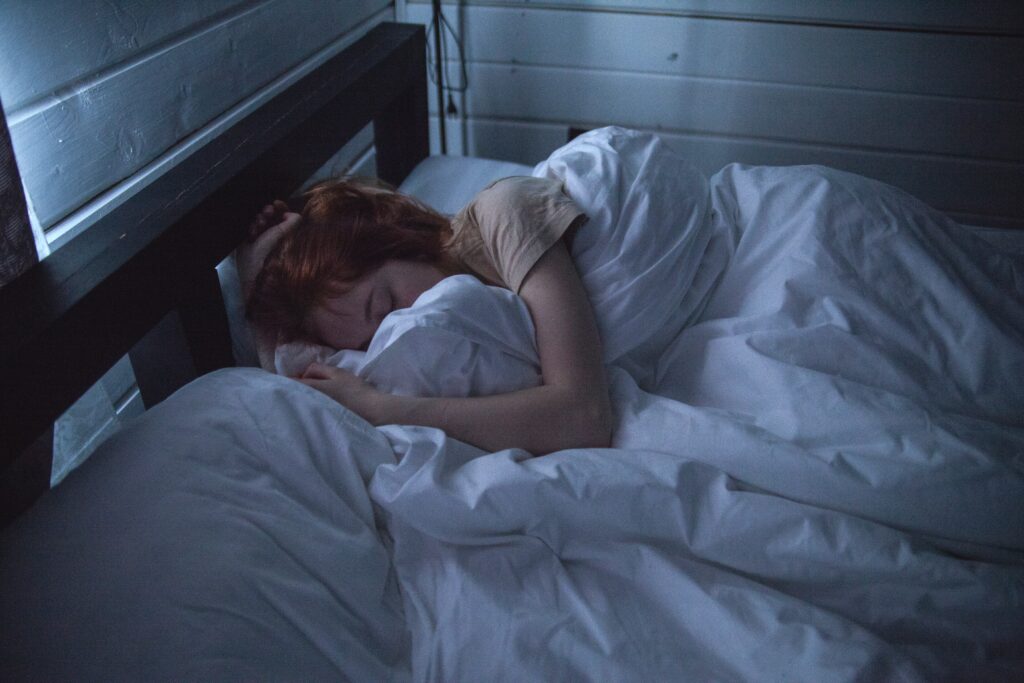
Your bedroom can be dark, quiet, and phone-free—and still work against you if it is too warm. For athletes, that matters. A hot room can make it harder to fall asleep, fragment the deep sleep that supports recovery, and leave the next day’s training feeling harder than it should.
The short answer: most adults sleep best in a cool room, commonly around 60–67°F (15.5–19.5°C). Treat that as a starting range, not a rule carved in stone. Your bedding, clothing, mattress, humidity, training schedule, and personal preference all change what “cool enough” feels like.
Why Temperature Helps Switch On Sleep
Sleep is tied to a drop in core body temperature. As bedtime approaches, your body shifts blood toward the skin—especially the hands and feet—so heat can escape. That cooling signal is part of the normal transition into sleep.
A warm bedroom interferes with the process. If the air, bedding, or mattress traps too much heat, your body has to work harder to shed it. You may toss and turn, kick off the covers, wake up sweaty, or spend more time in light sleep.
If you are building the rest of your evening around performance, pair a cooler room with the steps in our Athlete’s Night Routine. Temperature is one lever; timing, light, food, and wind-down habits are the others.
The Best Bedroom Temperature Is a Range, Not a Magic Number
The commonly cited range of 60–67°F (15.5–19.5°C) is useful because it gives you somewhere to start. It is not proof that 65°F is perfect for everyone or that 68°F ruins sleep.
Why people need different settings
A heavy duvet can make a 64°F room feel warmer than a 70°F room with a light sheet. Memory foam tends to hold more heat than a spring or latex mattress. A larger athlete may produce more heat in bed than a smaller person. High humidity can also make the same temperature feel warmer because sweat evaporates less efficiently.
If you already track sleep, compare a week of cooler-room nights with your normal setup. Our guide to Sleep Tracking for Athletes explains which trends are worth watching and which single-night numbers to ignore.
How Heat Hurts Recovery and Next-Day Training
Heat does not need to wake you completely to cost you recovery. Repeated brief awakenings and more time spent thermoregulating can reduce the continuity of sleep, including the deep-sleep periods that matter for physical restoration.
Deep sleep becomes harder to protect
Deep sleep is concentrated early in the night, when your body is also making its biggest temperature transition. A room that starts too warm can delay sleep onset and eat into that window. Later, overheating can trigger restlessness and awakenings that break up sleep cycles.
HRV and readiness may take a hit
Heart rate variability is influenced by many factors, including training load, stress, illness, caffeine, and alcohol. Heat stress can add another burden. When your body spends the night trying to cool itself, heart rate may stay higher and recovery may look worse the next morning.
Tomorrow’s workout feels the difference
Poor sleep can reduce motivation, coordination, reaction time, and the ability to repeat high-quality efforts. For lifters, that might mean bar speed drops sooner or a weight that felt controlled last week feels unstable. For field and endurance athletes, perceived exertion often rises.
For a broader view of sleep habits that support recovery, see What Are the Best Ways to Help With Sleep?
Build a Cooler Sleep Setup
Bedding and sleep clothing
Choose breathable sheets and a blanket you can adjust easily. Cotton, linen, and other moisture-moving fabrics can feel cooler than heavy synthetic layers, but the best material is the one that keeps you comfortable without repeated waking.
Use layers rather than one thick duvet. A light top sheet plus a blanket lets you regulate temperature as your body cools. If your feet get cold, wear socks; warming the feet can help blood flow to the skin and support the body’s cooling process without overheating your torso.
Your mattress matters, too
Mattresses differ in how much heat they absorb and how quickly they release it. Dense foam can feel warm, while coils allow more airflow and some latex designs sleep cooler. Toppers and protectors also matter: a waterproof or heavily padded protector can undo some of a mattress’s natural breathability.
Before replacing a mattress, test the lower-cost variables: lower the thermostat, remove a layer, switch the protector, and use a fan. If you still wake up hot for weeks, the sleep surface becomes a more reasonable place to invest.
The Warm-Shower Trick: Warm Up to Cool Down
It sounds backward, but a warm shower or bath one to two hours before bed can help you feel sleepy afterward. Warm water brings blood to the skin. When you step out, that blood flow helps heat leave the body, reinforcing the natural evening drop in core temperature.
Keep the water warm, not punishingly hot, and give yourself time to cool before getting into bed. A shower immediately before bed may still work for some people, but the one-to-two-hour window is the practical place to start.
This fits neatly with a consistent schedule. If you are deciding when to begin the wind-down, read What Is the Best Time to Go to Sleep? and work backward from your wake time.
Practical Ways to Cool the Room
Set the thermostat before you are tired
Do not wait until bedtime to cool a hot room. Lower the thermostat one to two hours before bed so the walls, bedding, and mattress have time to lose heat. If your home has a programmable thermostat, schedule the change as part of your night routine.
Move the air
A ceiling fan or small bedside fan can improve comfort by moving air across the skin. Fans do not lower the room’s temperature when nobody is there, but they can make the same temperature feel cooler while you sleep. Keep the airflow gentle enough that noise and dry air do not become new problems.
Pre-cool the building when you can
In hot weather, close blinds on sun-facing windows during the day and avoid heating the bedroom with late showers, cooking appliances, or electronics where possible. If nights are cool and local conditions allow, ventilate before bed, then close windows for darkness, noise, and security.
Training at Night? Cool Down on Purpose
Hard evening training raises core temperature, heart rate, and alertness. That does not mean you must avoid training after work. It means the session needs a deliberate landing.
Finish intense work as early as your schedule allows. Rehydrate, eat, and give your body time to settle. Keep the post-training shower warm rather than using an extreme cold plunge as a sleep strategy; comfort and consistency matter more than theatrics. Change out of warm training clothes, lower the room temperature, and dim the lights while you cool down.
If an evening session is unusually hard, expect sleep to take a little longer even in a cool room. Record the pattern instead of guessing. Over time, you may find that heavy lower-body work, conditioning, or late caffeine affects your nights more than training time alone.
Where Cooling Sleep Technology Fits
Technology makes the most sense after you have handled the basics. If your room, bedding, and routine are already consistent but you still sleep hot—or you and your partner need different temperatures—active bed-cooling may be worth testing.
Options include temperature-controlled mattress pad systems that circulate cooled or heated water through a pad, and bed fan or under-sheet cooling device products that move air across the sleep surface. Some smart systems also adjust temperature across the night and connect sleep data with recovery metrics.
Judge any device on comfort, noise, maintenance, reliability, and whether it solves the specific problem you still have. A premium chiller cannot compensate for a chaotic schedule, a very warm room, or bedding that traps heat. Start simple, measure the result, and upgrade only when the remaining problem is clear.
A Note on Alcohol and Bedroom Heat
Alcohol can make you feel warm and drowsy, but that combination is misleading. As it is metabolized, alcohol can fragment sleep and interfere with normal temperature regulation. A nightcap may also hide the effect of a warm room because you fall asleep quickly, then wake repeatedly later.
If recovery is the priority, do not use alcohol as a sleep aid. Keep the room cool, keep the routine consistent, and let actual sleep pressure do the work.
FAQ
Is 65°F the best temperature for sleep?
Around 65°F (18°C) is a reasonable starting point for many adults, but the useful range is broader—about 60–67°F. Adjust based on bedding, clothing, mattress, humidity, and whether you wake up hot or cold. Consistency and comfort matter more than hitting one exact number.
Can a room be too cold for sleep?
Yes. If you are shivering, your feet stay painfully cold, or you wake because you are uncomfortable, the room or your bedding is too cold. Add a layer or raise the temperature slightly. The goal is effortless cooling, not enduring a cold room.
Does a fan actually help you sleep cooler?
A fan does not meaningfully lower room temperature, but moving air helps sweat evaporate and makes the sleep surface feel cooler. It is often the cheapest first upgrade, provided the noise and airflow do not disturb you.
Should athletes sleep colder than everyone else?
Not necessarily. Athletes may produce more heat after evening training and have more recovery riding on sleep quality, but they still need an individually comfortable range. Start within 60–67°F, manage post-training heat, and evaluate sleep continuity and next-day readiness over several nights.
This article is for performance and lifestyle education only. If you suspect a medical sleep issue—such as loud snoring with breathing pauses, severe insomnia, or excessive daytime sleepiness—talk with a physician.
Put the Whole Night Together
Temperature works best as part of a system: a consistent wake time, a planned wind-down, the right sleep schedule, and a bedroom built for recovery. Download the free Athlete’s Night Routine Checklist to turn these pieces into a repeatable nightly process.
For more athlete-focused guides, tools, and product research, visit the Sleep Strength Resources hub.